| AI행정부터 바다연금까지… 전남광주특별시, ‘기본사회 메가시티’ 실험에 나선다. 인공지능·복지·에너지 결합 미래도시 테스트베드 선언 ai호남뉴스 박인석 기자 aihnnewsr@kakao.com |
| 2026년 01월 29일(목) 11:09 |
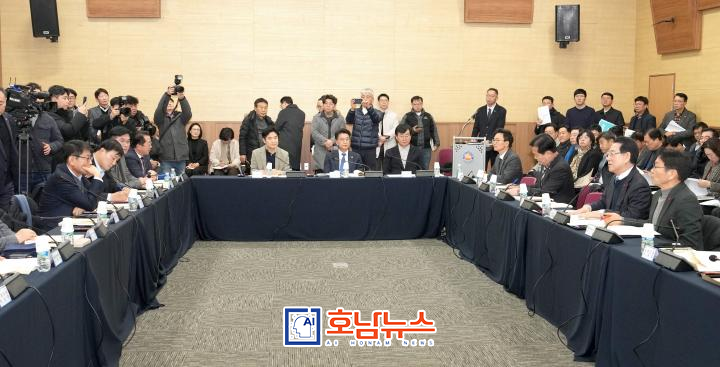 광주·전남 행정통합 특별법 검토 제3차 간담회 / 사진제공=전라남도 |
전남과 광주가 단순한 행정통합을 넘어 대한민국 최초의 ‘기본사회 선도 메가시티’를 지향하며 새로운 실험에 나섰다.
전남광주특별시 설치를 위한 특별법에는 AI 기반 행정혁신, 농어촌 기본소득, 바다연금, 에너지 이익공유제 등 기존 지방자치의 틀을 뛰어넘는 실험적 조항들이 대거 포함됐다.
이는 단순한 제도 통합이 아니라,
“주민의 삶을 국가와 지자체가 공동 책임지는 도시 모델”을 실제로 구현하겠다는 선언에 가깝다.
AI가 행정을 대신한다… 24시간 멈추지 않는 ‘에이전틱 AI 행정’
특별법 제135조와 제136조는 전남광주특별시를 대한민국 AI 행정의 테스트베드로 명시한다.
제135조(에이전틱 AI 행정 도입), 단순·반복 행정업무의 100% 자동화를 목표로, 민원 처리·행정 안내·서류 검증 등을 AI 에이전트가 수행한다.
제136조(행정 시뮬레이션 시스템), 정책 도입 전 AI 시뮬레이션을 통해
▷ 재정 영향
▷ 인구 이동
▷ 산업 파급효과를 사전에 분석해 행정의 효율성과 확장성을 획기적으로 높인다.
행정은 ‘사람이 기다리는 서비스’가 아니라 시민에게 먼저 찾아가는 24시간 공공 인프라로 재 정의된다.
농어촌 기본소득·고령 농업인 연금… ‘소득이 보장되는 지방’ 특별법은 전남광주특별시를 기본사회 선도지역으로 지정하고, 국가 차원의 소득 보장 실험을 제도화했다.
제338조 특별시 주민을 대상으로 농어촌 기본소득 지원 근거를 명문화
→ 농업·어업·농촌 거주 자체가 소득 보장의 조건이 된다.
제350조 은퇴한 고령 농업인에게 연금 지급 제도 도입 → 고령층의 불안정한 노후를 구조적으로 해소하는 첫 사례, 이는 보조금이 아니라 ‘지역에 살아온 시간’ 자체를 사회적 가치로 인정하는 정책 전환이다.
바다가 연금이 된다… 해상풍력 수익 주민 배당 ‘바다연금’ 전남의 풍부한 해양자원을 주민 삶으로 연결하는 제도도 특별법에 담겼다.
제261조(바다연금 제도) 해상풍력발전으로 발생하는 수익을 주민에게 직접 배당하는 이익공유제 모델을 제도화.
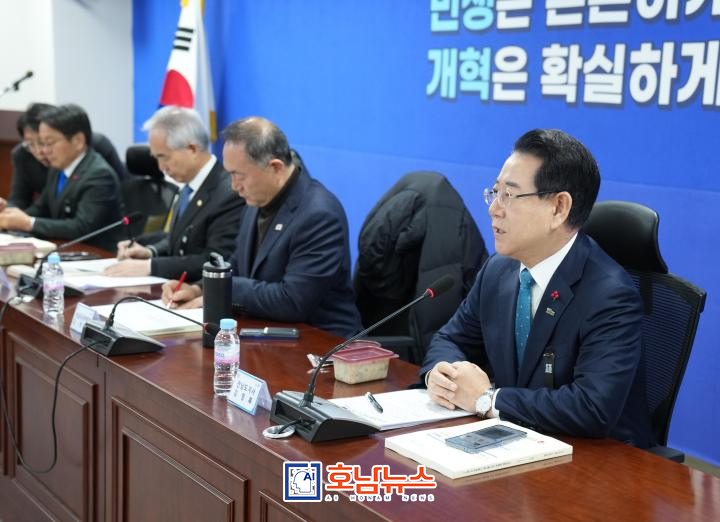 광주·전남 행정통합 특별법 검토 제4차 간담회 / 사진제공=전라남도 |
이는
▶ 지역 자원이 창출한 부가가치의 외부 유출을 막고
▶ 에너지 수익이 지역민에게 환원되는 선순환 구조를 만드는 장치다.
전남광주특별시는 ‘에너지를 생산하는 지역이, 이익도 누리는 지역’이라는 원칙을 분명히 했다.
광주정신·대동정신을 헌법처럼… 역사와 정체성의 제도화
특별법은 도시의 물리적 통합을 넘어 정신적 정체성까지 법에 담았다.
제1조(목적)
▷ 광주정신
▷ 대동정신을 특별시의 핵심 가치로 명시
제76조 여순항쟁과 5·18 민주화운동을 연계한 역사·민주 교육 체계 구축, 이는 전남광주특별시를 단순한 행정구역이 아닌 대한민국 민주·공동체 가치의 계승 도시로 규정하는 조항이다.
노동·산업·이민 정책까지 파격… ‘사람이 모이는 지방’ 설계 지역 산업난과 노동력 부족 해소를 위한 특례도 눈에 띈다.
제352조·제387조
▷ 외국인 근로자 전용 기숙사 건립 지원
▷ 지역특화형 비자 쿼터 확대
농업·제조업·수산업 현장의 인력 문제를 구조적으로 해결하겠다는 지방정부 최초의 시도다.
20년간 보통교부세 12% 추가… 재정 특례도 ‘전례 없는 수준’ 재정 지원 역시 기존 광역자치단체와는 차원이 다르다.
보통교부세 총액의 12%를 20년간 매년 추가 지원, 자치구·시군 간 형평성을 고려한 세목 명확 구분.
제28조: 소속 공무원 정원 자율 관리
제09조: 조정교부금 체계 명확화
행정·재정·인사 전반에서 자치권이 대폭 강화된 ‘준연방형 지방모델’에 가깝다.
에너지·첨단산업 특화… ‘국가 전략산업의 실험장’
특별법은 전남광주특별시를 AI·에너지·첨단산업 거점으로 명확히 설정했다.
제139조 한국광기술원 지원 확대
제118조 수상태양광 산업 육성
제121조 재생에너지 계통 포화 해소 국가 지원
제242조 수산자원보호구역 지정 변경권을 특별시장에게 이양
이는 규제를 완화하는 수준을 넘어 지역 여건에 맞춘 유연한 개발권한을 부여하는 특례다.
전남광주특별시, ‘미래 대한민국’을 먼저 실험한다.
전남광주특별시는 묻고 있다.
“지방은 지원 대상인가, 아니면 국가 미래를 시험할 공간인가.”
AI 행정, 기본소득, 바다연금, 에너지 이익공유, 역사 가치의 제도화까지.
이 특별법은 대한민국 지방행정의 새로운 표준을 전남과 광주에서 먼저 시험하겠다는 선언이다.
성공한다면, 전남광주특별시는 ‘변방의 통합’이 아니라 대한민국 기본사회 모델의 출발점이 될 수 있다.
[Jeonnam = Honam News] aihnnews@kakao.com
From AI Administration to a Sea Pension… Jeonnam–Gwangju Special City Launches a “Basic Society Megacity” Experiment
Declaring a Future-City Testbed Integrating Artificial Intelligence, Welfare, and Energy
A New Standard for Local Governance in Korea, Enshrined in the Special Act
Jeonnam Province and Gwangju Metropolitan City have embarked on a new experiment that goes beyond simple administrative integration, aiming to become Korea’s first “Basic Society–Leading Megacity.”
The Special Act for the Establishment of Jeonnam–Gwangju Special City includes a wide range of experimental provisions that transcend the conventional framework of local autonomy, such as AI-driven administrative innovation, rural basic income, a sea pension, and an energy profit-sharing system.
This is not merely an institutional merger.
It is closer to a declaration to realize a city model in which the state and local governments jointly take responsibility for residents’ lives.
AI Takes Over Administration… “Agentic AI Governance” That Never Sleeps
Articles 135 and 136 of the Special Act designate Jeonnam–Gwangju Special City as Korea’s testbed for AI-based administration.
Under Article 135 (Introduction of Agentic AI Administration), the city aims to automate 100 percent of simple and repetitive administrative tasks, with AI agents handling civil complaints, administrative guidance, and document verification.
Article 136 (Administrative Simulation System) mandates the use of AI simulations prior to policy implementation to analyze in advance:
fiscal impacts,
population movement, and
industrial ripple effects,
thereby dramatically enhancing administrative efficiency and scalability.
Administration is redefined not as a service citizens wait for, but as a 24-hour public infrastructure that proactively reaches out to them.
Rural Basic Income and Pensions for Elderly Farmers… A Region with Guaranteed Income
The Special Act designates Jeonnam–Gwangju Special City as a Basic Society pilot region and institutionalizes a national-level experiment in income security.
Article 338 explicitly provides the legal basis for rural basic income for residents of the Special City, making engagement in agriculture, fisheries, or rural residency itself a condition for income security.
Article 350 introduces a pension system for retired elderly farmers, marking the first structural solution to income insecurity in old age.
This represents not a subsidy, but a policy shift that recognizes time spent living and working in the region itself as social value.
When the Sea Becomes a Pension… A “Sea Pension” Funded by Offshore Wind Power
The Special Act also incorporates a system that connects Jeonnam’s abundant marine resources directly to residents’ livelihoods.
Under Article 261 (Sea Pension System), profits generated from offshore wind power are distributed directly to residents through an institutionalized profit-sharing model.
This mechanism:
prevents the external outflow of value created by regional resources, and
establishes a virtuous cycle in which energy revenues are returned to local communities.
Jeonnam–Gwangju Special City clearly affirms the principle that regions producing energy should also enjoy its benefits.
The Gwangju Spirit and the Spirit of Daedong, Enshrined Like a Constitution
Beyond physical integration, the Special Act codifies the city’s spiritual and historical identity.
Article 1 (Purpose) designates the Gwangju Spirit and the spirit of Daedong (great communal solidarity) as core values of the Special City.
Article 76 establishes a historical and democratic education framework linking the Yeosu–Suncheon Uprising with the May 18 Democratization Movement.
This defines Jeonnam–Gwangju Special City not merely as an administrative unit, but as a city that inherits and carries forward Korea’s democratic and communal values.
Bold Measures in Labor, Industry, and Immigration… Designing a Region That Attracts People
Notable special provisions also address industrial stagnation and labor shortages.
Under Articles 352 and 387, the Act provides:
support for building dedicated dormitories for foreign workers, and
expansion of region-specific visa quotas.
This marks the first attempt by a local government to structurally resolve labor shortages in agriculture, manufacturing, and fisheries.
An Additional 12% of Local Shared Tax for 20 Years… Unprecedented Fiscal Privileges
Fiscal support under the Act is on an entirely different scale from that of existing metropolitan governments.
The Act provides for an additional 12 percent of the total local shared tax annually for 20 years, with a clear delineation of tax items to ensure fiscal equity among districts and counties.
It also includes:
Article 28: autonomous management of public official staffing levels,
Article 9: clarification of the adjustment grant system.
Taken together, these provisions amount to a quasi-federal local governance model with significantly expanded autonomy across administration, finance, and personnel.
Energy and Advanced Industries… A Testbed for National Strategic Industries
The Special Act clearly positions Jeonnam–Gwangju Special City as a hub for AI, energy, and advanced industries.
Key provisions include:
Article 139: expanded support for the Korea Photonics Technology Institute,
Article 118: promotion of the floating solar power industry,
Article 121: national support to resolve renewable energy grid congestion,
Article 242: delegation to the Special City Mayor of authority to modify marine resource protection zones.
These go beyond regulatory easing, granting flexible development authority tailored to regional conditions.
Jeonnam–Gwangju Special City Experiments with the Future of Korea First
Jeonnam–Gwangju Special City poses a fundamental question:
“Are regions merely objects of support, or spaces where the nation’s future is tested?”
From AI administration and basic income to a sea pension, energy profit-sharing, and the institutionalization of historical values, this Special Act declares that a new standard for Korean local governance will be tested first in Jeonnam and Gwangju.
If successful, Jeonnam–Gwangju Special City could become not a peripheral integration, but the starting point of Korea’s Basic Society model.
 ai호남뉴스 박인석 기자 aihnnewsr@kakao.com