| “같은 거리, 네 배 요금… 전남·광주 교통차별 끝낸다” 민형배, ‘요금 단일화·통합 환승제’ 승부수… 남도패스로 교통 혁명 선언 ai호남뉴스 박충배 편집/칼럼/논설 aihnnewsr@kakao.com |
| 2026년 03월 23일(월) 14:05 |
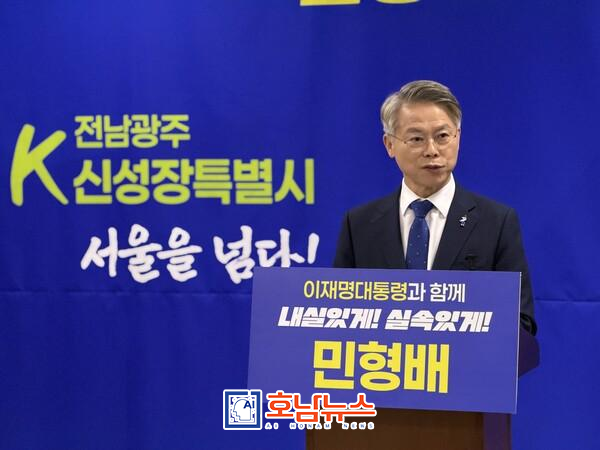 민형배 전남광주통합특별시장 예비후보 / 사진제공=민형배의원실 |
전남·광주 통합특별시 논의의 핵심 축이 ‘교통 혁명’으로 옮겨가고 있다.
더불어민주당 전남광주통합특별시장 경선 후보인 민형배 국회의원(광주 광산구을)이 22일, 전남과 광주의 대중교통 요금체계를 하나로 묶는 ‘통합 환승요금제’ 도입을 중심으로 한 교통서비스 4대 혁신 정책을 전격 발표했다.
민 의원이 내놓은 4대 정책은 통합 환승요금제 도입, 월정액 통합 교통패스 ‘남도패스’ 도입, 농어촌 공공교통 확대, 단계적 무상교통 추진이다.
핵심은 단순한 요금 인하가 아니라, “분절된 교통체계를 하나의 생활권 시스템으로 재설계하겠다.”는 구조적 전환이다.
■ “서울은 3천 원, 전남·광주는 1만 원”… 구조적 교통 불공정
민 의원 측 자료에 따르면, 대중교통으로 50km를 이동할 경우 서울·경기권은 3천 원대 수준인 반면, 광주에서 장흥까지는 약 1만3천 원이 소요된다.
같은 거리임에도 최대 4배에 달하는 요금 격차가 발생하는 현실은, 단순한 지역 차이를 넘어 ‘교통 불공정’이라는 지적이다.
민 의원은 “이동 비용이 곧 기회의 격차가 되는 구조를 더 이상 방치할 수 없다.”며 “전남·광주를 하나의 요금체계로 묶어 생활권에 맞는 교통 정의를 실현하겠다.”고 밝혔다.
■ 버스·철도 하나로… ‘통합 환승요금제’ 전면 도입
핵심 정책인 통합 환승요금제는 버스와 철도를 하나의 체계로 연결해 환승 시 추가요금을 최소화하는 구조다.
통근·통학·통원 등 필수 이동에 대해서는 체감 비용을 낮추고, 이동 거리가 늘어나더라도 요금이 급격히 증가하지 않도록 설계된다.
이는 기존처럼 시·군 경계를 넘을 때마다 요금이 쪼개지는 구조를 근본적으로 해체하는 정책으로, 생활권 중심 교통체계로의 전환을 의미한다.
■ “탈 때마다 계산 끝”… 월정액 ‘남도패스’ 도입
민 의원이 함께 제시한 ‘남도패스’는 전남·광주 전역에서 사용할 수 있는 월정액 통합 교통패스다.
월 1회 결제로 광역·시내·농어촌버스와 BRT 등을 자유롭게 이용할 수 있도록 설계됐다.
이는 ‘탈 때마다 비용을 계산하는 교통’에서 ‘한 번 결제로 자유롭게 이동하는 교통’으로의 패러다임 전환으로, 교통비 절감과 대중교통 이용 활성화를 동시에 노린 전략이다.
■ 농어촌부터 무상까지… ‘이동권 국가책임’ 확대
농어촌 지역에 대해서는 공공교통 확대가 추진된다.
곡성·신안·영암·진도·완도 등에서 시행 중인 무료·공영버스 모델을 기반으로, 인구감소지역 중심으로 단계적 확산이 이뤄질 예정이다.
무상교통 역시 전면 시행이 아닌 고령화 지역과 교통 취약지역부터 단계적 도입 방식으로 추진된다.
단순 복지정책이 아니라, “이동권을 보장해 지역 이탈을 막는 정주 전략”이라는 점에서 의미가 크다.
■ “비싼 교통은 사람을 밀어낸다”… 지역소멸 대응 카드
민 의원은 이번 정책의 본질을 분명히 했다.
“비싼 교통은 사람을 밀어내고, 불편한 교통은 지역을 소멸시킨다.”
그는 “전남과 광주를 더 이상 이동 때문에 떠나는 공간이 아니라, 이동이 편해 머무는 도시로 바꾸겠다.”며 “교통을 바꾸는 것이 곧 지역의 미래를 바꾸는 일”이라고 강조했다.
이번 정책은 전남·광주 통합특별시 구상의 실질적 실행력을 가늠할 핵심 공약으로 평가된다.
행정 통합이 선언에 그치지 않기 위해서는 결국 주민이 매일 체감하는 ‘이동 시스템’부터 하나로 연결돼야 한다는 점에서, 교통이 가장 강력한 승부처로 떠오르고 있다.
“Same Distance, Four Times the Fare… Ending Transportation Inequality in Gwangju–Jeonnam”
Min Hyung-bae Unveils Fare Integration and Unified Transfer System… Declares ‘Transportation Revolution’ with Nando Pass
【Jeonnam–Gwangju = AI Honam News】 aihnnews@kakao.com
The debate over the Gwangju–Jeonnam integrated metropolitan city is now shifting toward a “transportation revolution.”
Min Hyung-bae, a National Assembly member (Gwangsan-eul, Gwangju) and candidate in the Democratic Party primary for the proposed Gwangju–Jeonnam metropolitan mayor, announced on the 22nd a comprehensive four-point transportation innovation plan, centered on introducing a unified transfer fare system that integrates public transportation fares across the region.
The four key policies include:
▲ Introduction of a unified transfer fare system
▲ Launch of a monthly flat-rate integrated transit pass, the “Nando Pass”
▲ Expansion of public transportation in rural areas
▲ Gradual implementation of free public transportation
The core of the proposal is not merely fare reduction, but a structural transformation—“redesigning fragmented transport systems into a single, unified living-zone network.”
■ “Seoul: 3,000 won, Jeonnam–Gwangju: 10,000 won”… Structural Inequality in Transportation
According to data released by Min’s team, traveling 50 km by public transportation costs around 3,000 won in the Seoul metropolitan area, whereas the same distance from Gwangju to Jangheung costs approximately 13,000 won.
This nearly fourfold difference highlights what is being described as systemic transportation inequality, rather than a simple regional disparity.
Min stated, “Transportation costs have effectively become a gap in opportunity. This structure can no longer be ignored,” adding, “We will unify the fare system across Gwangju and Jeonnam to achieve transportation fairness aligned with a shared living zone.”
■ Bus and Rail as One… Full Introduction of a Unified Transfer Fare System
The centerpiece policy—the unified transfer fare system—will connect buses and railways into a single network, minimizing additional charges when transferring.
It is designed to lower the cost burden for essential travel such as commuting, schooling, and medical visits, while preventing sharp fare increases even over longer distances.
This represents a fundamental shift away from the current fragmented system, where fares rise at each administrative boundary, toward a living-zone-based transportation model.
■ “No More Paying Every Ride”… Monthly Flat-Rate ‘Nando Pass’
The proposed Nando Pass is a monthly flat-rate transit pass usable across the entire Gwangju–Jeonnam region.
With a single monthly payment, users will have unlimited access to regional buses, city buses, rural buses, and BRT systems.
This marks a paradigm shift from a “pay-per-ride” system to a “pay once, travel freely” model, aiming to reduce transportation costs while encouraging greater use of public transit.
■ From Rural Mobility to Free Transit… Expanding the Right to Mobility
The plan also includes expanding public transportation in rural areas.
Building on successful free or publicly operated bus models in regions such as Gokseong, Sinan, Yeongam, Jindo, and Wando, the policy will be gradually extended, starting with areas facing population decline.
Free public transportation will also be introduced in phases, prioritizing aging communities and transportation-vulnerable regions.
Rather than a simple welfare measure, the policy is framed as a residential sustainability strategy, ensuring mobility rights to prevent population outflow.
■ “Expensive Transport Drives People Away”… A Strategy Against Regional Decline
Min emphasized the fundamental nature of the policy:
“Expensive transportation drives people out, and inconvenient transportation leads to regional extinction.”
He added, “We will transform Gwangju and Jeonnam from places people leave because of mobility constraints into places where people stay because movement is convenient. Changing transportation means changing the future of the region.”
This policy is seen as a critical test of the practical viability of the Gwangju–Jeonnam metropolitan integration plan.
For administrative integration to move beyond symbolism, it must be felt in daily life—starting with the transportation system people use every day, now emerging as the most decisive battleground.
 ai호남뉴스 박충배 편집/칼럼/논설 aihnnewsr@kakao.com