| “전남 사찰, 국가 보물로”… 선암사·송광사·흥국사 문화유산 3건 지정 예고 건축·불화 모두 인정… 호남 불교문화 ‘격’ 높였다 ai호남뉴스 박충배 편집/칼럼/논설 aihnnewsr@kakao.com |
| 2026년 05월 04일(월) 15:10 |
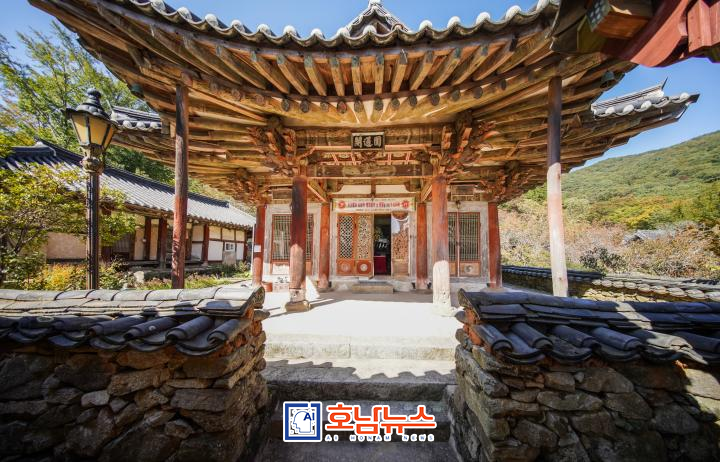 문화유산-순천 선암사 원통전 / 사진제공=전라남도 |
전라남도 사찰의 대표 문화유산들이 국가 보물로 지정될 전망이다.
전라남도는 국가유산청이 선암사 원통전, 송광사 응진당, 흥국사 제석천·천룡도 등 총 3건의 문화유산을 국가지정문화유산 보물로 지정 예고했다고 밝혔다.
이번 지정 예고는 전남 지역 사찰 건축과 불교회화가 지닌 역사성과 예술성을 국가 차원에서 공식 인정한 것으로, 지역 문화유산 위상 제고의 중요한 전환점으로 평가된다.
■ 선암사 원통전… 왕실 발원 깃든 ‘丁자형 불전’
선암사 원통전은 2018년 유네스코 세계유산 ‘산사, 한국의 산지승원’에 포함된 대표 불전이다.
임진왜란 이후 소실과 중건을 거쳐 1824년 왕실 후원으로 중창되며 현재의 모습을 갖췄다.
특히 조선 왕실의 후계 탄생을 기원하던 ‘원당’ 성격을 지니며, 정조의 발원과 순조 탄생 설화가 전해지는 등 역사적 의미가 깊다.
건축적으로는 앞쪽이 돌출된 ‘丁자형’ 평면과 삼면이 열린 개방 구조가 특징이다.
일반 불전과 차별화된 공간 구성과 호남 특유의 장식·색채가 잘 보존돼 높은 예술적 가치를 인정받고 있다.
■ 송광사 응진당… 승보사찰의 중심 불전
송광사 응진당은 우리나라 삼보사찰 가운데 승보사찰을 대표하는 핵심 전각이다.
1504년 창건, 1623년 중수를 거쳐 현재까지 이어져 온 건물로, 내부에는 목조석가여래삼존상과 16나한상, 후불탱 등 다수의 불교 문화재가 봉안돼 있다.
정면 3칸·측면 3칸의 균형 잡힌 구조와 전통 건축기법이 온전히 남아 있어 역사성과 건축적 완성도가 동시에 높다는 평가를 받는다.
■ 흥국사 제석천·천룡도… 정적과 동적 대비의 걸작
흥국사의 제석천·천룡도는 불법을 수호하는 신들을 그린 불화로, 각각 별도 화면이면서 한 쌍을 이루는 희귀한 형식이다.
1741년 수화승 긍척을 중심으로 제작된 이 작품은 정적인 구도의 제석천도와 역동적인 천룡도가 대비를 이루며 조선 후기 불교회화의 특징을 잘 보여준다.
신앙 체계와 미술적 구성의 완성도를 동시에 갖춘 작품으로 평가되며, 학술적 가치 또한 매우 높다.
■ “보존 넘어 활용까지”… 전남 문화유산 정책 가속
전라남도는 이번 보물 지정 예고를 계기로 문화유산의 체계적 보존과 함께 관광·교육·콘텐츠 활용까지 확대한다는 방침이다.
도 관계자는 “우수 문화유산의 조사·연구와 보존 지원을 지속 확대해 국가지정문화유산 지정을 더욱 늘려가겠다”며 “지역 문화유산의 가치를 국내외에 널리 알리겠다.”고 밝혔다.
이번 지정 예고는 단순한 문화재 등급 상승을 넘어, 전남이 보유한 불교문화 자산이 국가적·세계적 경쟁력을 갖춘 문화 콘텐츠로 도약하는 계기가 될 것으로 기대된다.
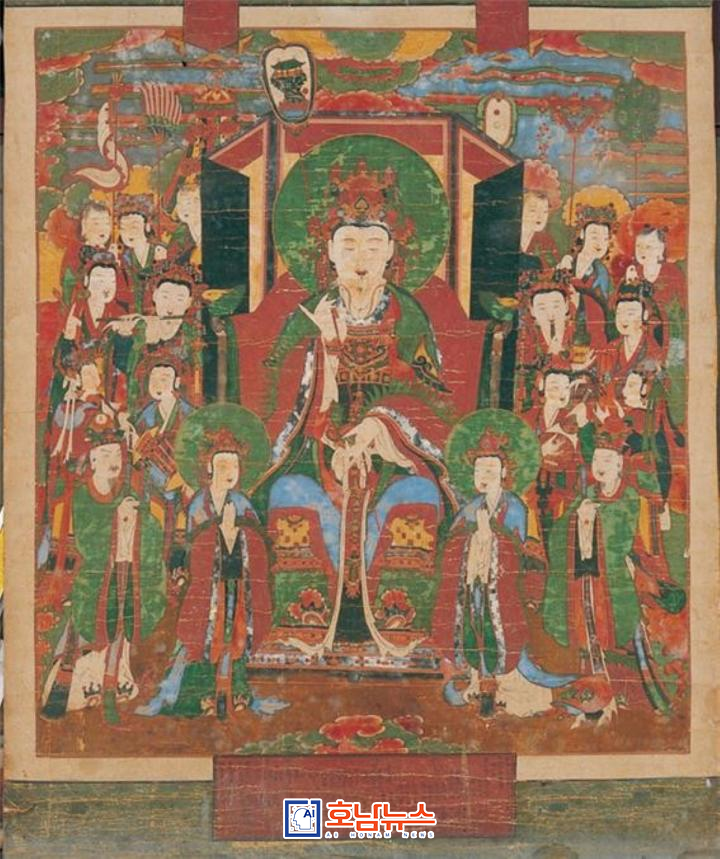 문화유산-여수 흥국사 제석천·천룡도(제석천도) / 사진제공=전라남도 |
“Jeonnam Temples Elevated to National Treasures”… Designation of Three Cultural Assets Announced
Subheadline: Recognition of Architecture and Buddhist Paintings Raises the Status of Honam’s Buddhist Heritage
【Jeonnam·Gwangju = AI Honam News】 aihnnews@kakao.com
Leading cultural assets from temples in Jeollanam-do are set to be designated as National Treasures.
Jeollanam-do announced that the Korea Heritage Service has given prior notice of designation for three cultural properties as state-designated treasures: the Wontongjeon Hall of Sunamsa, the Eungjindang Hall of Songgwangsa, and the Buddhist Paintings of Indra and Heavenly Dragons at Heungguksa.
This preliminary designation marks official national recognition of the historical and artistic value of Jeonnam’s temple architecture and Buddhist paintings, and is seen as a major turning point in elevating the region’s cultural heritage profile.
■ Sunamsa Wontongjeon… A ‘T-shaped’ Hall Rooted in Royal Patronage
The Wontongjeon Hall of Sunamsa is a representative Buddhist hall included in the UNESCO World Heritage site “Sansa, Buddhist Mountain Monasteries in Korea” (inscribed in 2018).
After being destroyed during the Imjin War, it was rebuilt multiple times and underwent a major reconstruction in 1824 with royal support, forming its current structure.
Historically, it functioned as a royal prayer hall (wondang) for the birth of heirs. It is associated with King Jeongjo’s vow and the birth of King Sunjo, adding to its historical significance.
Architecturally, the hall features a distinctive T-shaped layout with a protruding front section and an open structure on three sides. Its unique spatial composition, along with regional decorative styles and color schemes, highlights its high artistic value.
■ Songgwangsa Eungjindang… The Core Hall of the Sangha Treasure Temple
The Eungjindang Hall of Songgwangsa represents one of Korea’s Three Jewel Temples, specifically the Sangha (monastic community).
Originally built in 1504 and reconstructed in 1623, the structure has preserved its value to this day. Inside are enshrined numerous important Buddhist artifacts, including a wooden triad statue of Shakyamuni, sixteen Arhat statues, and various hanging scroll paintings.
With its balanced three-bay-by-three-bay structure and well-preserved traditional construction techniques, it is highly regarded for both its historical and architectural significance.
■ Heungguksa Buddhist Paintings… A Masterpiece of Stillness and Motion
The Buddhist paintings of Indra and Heavenly Dragons at Heungguksa depict guardian deities protecting the Dharma.
Created as a paired set on separate canvases, this rare format offers valuable insight into late Joseon-period Buddhist painting traditions.
Produced in 1741 under the direction of the monk-painter Geungcheok, the works contrast a calm, static composition (Indra) with a dynamic, energetic one (Heavenly Dragons), forming a cohesive expression of Buddhist cosmology.
They are regarded as masterpieces that combine religious meaning with artistic excellence, holding significant academic value.
■ “Beyond Preservation to Utilization”… Accelerating Cultural Heritage Policy
Jeollanam-do plans to use this designation as momentum to expand not only systematic preservation but also tourism, education, and cultural content development.
A provincial official stated, “We will continue to strengthen research and preservation support for outstanding cultural heritage and expand the number of nationally designated properties,” adding, “We aim to promote the value of our regional heritage both domestically and internationally.”
This designation is expected to go beyond a simple upgrade in status, serving as a catalyst for Jeonnam’s rich Buddhist heritage to evolve into globally competitive cultural content.
 ai호남뉴스 박충배 편집/칼럼/논설 aihnnewsr@kakao.com