2026.04.02 (목) 19:17




 닫기
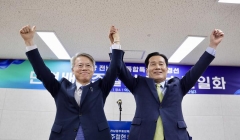
닫기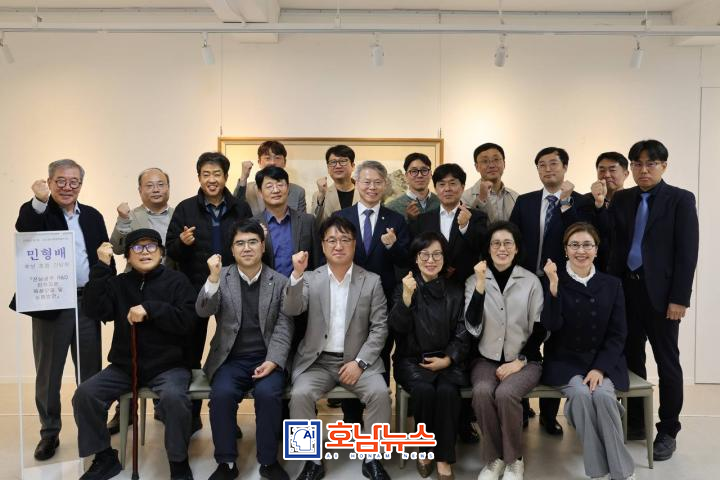 전남광주 R&D 통합 기획단 추진 / 사진제공=민형배의원실 |
전남·광주 산업정책의 패러다임이 ‘연구 중심’에서 ‘일자리 창출 중심’으로 전환되는 신호탄이 쏘아 올려졌다.
더불어민주당 전남광주통합특별시장 경선 후보인 민형배 국회의원(광주 광산구을)이 연구개발(R&D)을 청년 일자리로 직결시키는 구조 혁신을 공식화하며, 기존 국가 주도형 연구 체계를 근본적으로 재설계하겠다는 구상을 내놓았다.
■ “연구는 넘치고 일자리는 없다”… 구조적 모순 정면 돌파
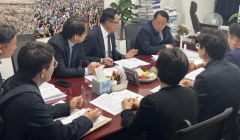
민 의원은 지난 1일 오후 광주 동구 동명동에서 열린 지역 대학 산학협력 교수들과의 간담회에서 “연구가 논문으로 끝나는 시대를 끝내야 한다.”며 “기업 성장과 일자리 창출로 이어지는 실질적 성과 중심 구조로 전환하겠다.”고 밝혔다.
이날 간담회에는 광주대, 조선대, 전남대, 순천대, 목포대 등 주요 대학 연구진이 참석해 현장의 문제를 공유했다.
참석자들은 한목소리로 ▲연구 성과의 산업화 단절 ▲지역 인재의 수도권 유출 ▲과제 중심의 단편적 R&D 구조 등을 핵심 한계로 지적했다.
특히 “연구는 쌓이지만 기업으로 이어지지 않는다”는 지적은 전남·광주 산업 생태계의 구조적 취약성을 드러내는 단면으로 분석된다.
■ “문제는 돈이 아니라 설계”… 국가 주도 구조 뒤집는다.
민 의원은 이러한 한계의 본질을 “예산 부족이 아니라 구조의 문제”라고 진단했다.
중앙정부가 과제를 설계하고 지역이 이를 따내기 위해 경쟁하는 기존 방식으로는 지역 산업 기반과 고용 창출을 동시에 달성하기 어렵다는 판단이다.
그는 “지역이 무엇을 할지 직접 기획하고, 국가는 이를 지원하는 방식으로 바뀌어야 한다”며 “이제는 예산을 따오는 경쟁이 아니라 판을 설계하는 경쟁으로 전환해야 한다”고 강조했다.
■ ‘전남광주 R&D 통합 기획단’… 산학연 연결하는 초광역 플랫폼
핵심 실행 전략으로는 ‘전남광주 R&D 통합 기획단(가칭)’이 제시됐다.
이 기획단은 대학·기업·연구기관이 공동으로 참여해 ▲지역 산업 맞춤형 연구 기획 ▲국가사업 연계 ▲대형 프로젝트 설계 등을 수행하는 ‘초광역 연구 플랫폼’으로 구축된다.
지자체는 단순 행정기관을 넘어 ‘연결자이자 설계자’로 역할을 재정의한다.
산학연과 중앙정부를 하나로 묶어 실질적 산업 성과를 만들어내는 ‘전략 허브’로 기능하겠다는 구상이다.
■ AI·에너지·바이오 결합… “연구→기업→일자리” 선순환 구축
민 의원은 특히 전남·광주의 핵심 전략 분야인 ▲인공지능(AI) ▲에너지 ▲바이오 ▲정밀의료 등을 통합해 산업 생태계를 재편하겠다는 계획을 밝혔다.
이는 단일 분야 중심의 분절적 연구를 넘어, 융합형 산업 구조로 전환함으로써 기업 성장을 촉진하고 양질의 청년 일자리를 창출하겠다는 전략이다.
■ “연구개발이 곧 청년 일자리”… 통합특별시 산업 전략의 핵심 축
민 의원은 “연구개발이 곧 청년 일자리로 이어지는 도시를 만들겠다.”며 “전남광주는 더 이상 지원을 기다리는 지역이 아니라, 대한민국 산업과 연구 혁신의 기준을 설계하는 지역이 될 것”이라고 밝혔다.
이번 구상은 전남·광주 통합특별시 출범을 앞두고 산업·인재·일자리 정책을 하나의 축으로 묶는 전략적 시도로, 향후 지역 산업 경쟁력 재편의 핵심 변수로 작용할 전망이다.
“Papers Are Over—Jobs Begin Now”… Min Hyung-bae Declares ‘Youth Employment Revolution’ by Overhauling R&D Structure
Jeonnam–Gwangju Integrated R&D Planning Taskforce Proposed… “Regions Design, the Nation Invests”
【Jeonnam–Gwangju = AI Honam News】 aihnnews@kakao.com
A major shift is underway in Jeonnam–Gwangju’s industrial policy—from a research-centered model to one focused on job creation.
Min Hyung-bae, a National Assembly member (Gwangju Gwangsan-eul) and candidate in the Democratic Party primary for mayor of the proposed Jeonnam–Gwangju Integrated Special City, has unveiled a plan to fundamentally restructure the national R&D system so that research directly leads to youth employment.
■ “Research Is Plenty, Jobs Are Not”… Confronting Structural Contradictions
At a meeting with university-industry cooperation professors held on the evening of April 1 in Dongmyeong-dong, Dong-gu, Gwangju, Rep. Min stated,
“We must end the era where research stops at academic papers. We will shift to a performance-oriented system where research leads to business growth and job creation.”
Professors from major regional universities—including Gwangju University, Chosun University, Chonnam National University, Sunchon National University, and Mokpo National University—attended the meeting and shared on-the-ground challenges.
Participants pointed out key structural limitations:
Disconnection between research outcomes and industrial application
Outflow of locally trained talent to the Seoul metropolitan area
Fragmented, project-based R&D structures
The widely shared concern—“research accumulates but does not translate into businesses”—was seen as a clear indicator of the region’s structural weaknesses.
■ “The Problem Is Not Money, but Design”… Reversing the State-Led Model
Rep. Min diagnosed the root issue not as a lack of funding, but as a flawed system.
Under the current model—where the central government defines projects and regions compete for funding—it is difficult to simultaneously build local industries and create jobs.
“We need to shift to a system where regions design what they need, and the state supports it,” he emphasized.
“This is no longer about competing for budgets—it’s about competing to design the system itself.”
■ ‘Jeonnam–Gwangju Integrated R&D Planning Taskforce’… A Super-Regional Platform
As a core strategy, Min proposed establishing a “Jeonnam–Gwangju Integrated R&D Planning Taskforce” (tentative name).
This body would serve as a super-regional platform involving universities, companies, and research institutions, responsible for:
Designing industry-specific R&D projects
Linking them to national programs
Planning large-scale strategic initiatives
Local governments, he said, must evolve from administrative bodies into “connectors and designers”—strategic hubs that integrate academia, industry, and government to produce tangible outcomes.
■ AI–Energy–Bio Convergence… Building a “Research → Business → Jobs” Cycle
Rep. Min also outlined plans to integrate key regional industries—including:
Artificial Intelligence (AI)
Energy
Bio
Precision Medicine
By moving beyond siloed, single-sector research toward a convergence-based industrial ecosystem, the goal is to accelerate business growth and create high-quality jobs for young people.
■ “R&D Will Lead Directly to Youth Jobs”… Core Strategy for the Integrated Special City
“Research and development must directly lead to youth employment,” Min said.
“Jeonnam–Gwangju will no longer be a region that waits for support—it will become a region that designs the standards of industrial and research innovation in Korea.”
This initiative is seen as a strategic attempt to unify industry, talent, and employment policies ahead of the launch of the Jeonnam–Gwangju Integrated Special City, and is expected to play a pivotal role in reshaping the region’s industrial competitiveness.
 ai호남뉴스 박충배 편집/칼럼/논설 aihnnewsr@kakao.com