2026.03.28 (토) 09:37




 닫기
닫기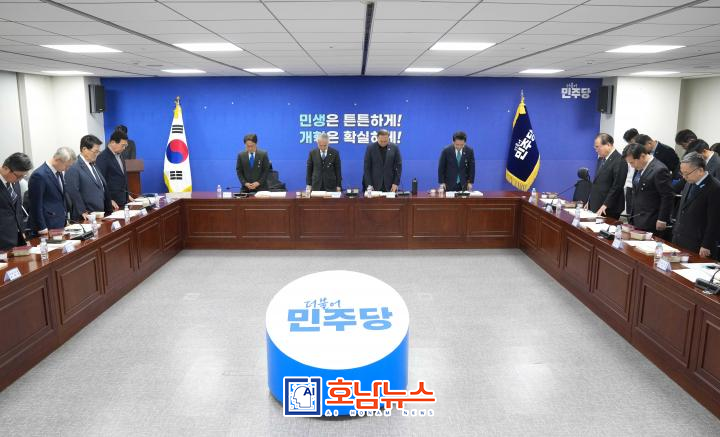 광주·전남 행정통합 특별법 검토 제4차 간담회 / 사진제공=전라남도 |
【사설】
이 법은 대한민국이 지방을 어떤 공간으로 인식하는지에 대한 국가적 답변이다.
전남과 광주가 제시한 통합 모델은 ‘지원받는 지방’이 아니라, 국가의 미래를 먼저 실험하는 공간을 자처하고 있다.
지금까지 지방 행정은 늘 중앙의 보조금과 규제 완화에 의존해 왔다.
인구가 줄면 예산을 늘리고, 산업이 쇠퇴하면 단기 사업을 붙이는 방식이었다.
그러나 그 결과는 분명하다.
수도권 집중은 멈추지 않았고, 지방의 자립 기반은 오히려 더 약해졌다. 이런 구조를 바꾸지 않고서는 지방소멸을 막을 수 없다.
전남광주특별시 특별법이 주목받는 이유는 바로 여기에 있다.
이 법은 행정, 복지, 에너지, 산업을 하나의 구조로 엮어 ‘기본사회 선도지역’이라는 새로운 방향을 제시한다.
인공지능 기반 행정 도입을 통해 단순·반복 업무를 자동화하고, 시민에게는 24시간 중단 없는 행정 서비스를 제공하겠다는 발상은 행정 효율의 문제가 아니라 공공서비스의 개념 자체를 바꾸는 시도다.
소득 정책 역시 마찬가지다.
농어촌 기본소득과 고령 농업인 연금은 단순한 복지가 아니다. 이는 농업과 어업, 농어촌 지역에 살아온 시간이 사회를 유지해 온 기여라는 점을 국가가 공식적으로 인정하는 제도다.
지방을 ‘지원 대상’이 아니라 ‘가치 창출의 주체’로 바라보는 관점 전환 없이는 나올 수 없는 발상이다.
해상풍력 수익을 주민에게 배당하는 바다연금 제도는 더 분명하다.
그동안 에너지 생산지는 환경 부담을 떠안고, 이익은 외부로 빠져나갔다.
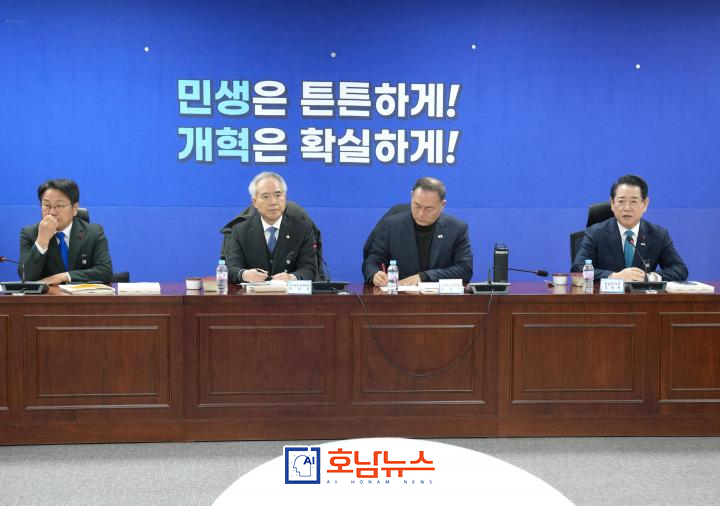 광주·전남 행정통합 특별법 검토 제4차 간담회 / 사진제공=전라남도 |
전남광주특별시는 이 오래된 불균형을 바로잡겠다고 선언했다.
지역 자원이 만든 부가가치를 지역민에게 환원하는 구조는, 지방이 스스로 지속 가능한 재정을 만들어가는 출발점이다.
이 모든 실험을 가능하게 하는 토대는 전례 없는 재정·자치 특례다.
20년간 보통교부세 총액의 12%를 추가 지원하고, 자치구와 시군 간 재정 형평성을 제도적으로 보장하며, 공무원 정원 관리까지 자율성을 부여했다.
이는 중앙집권적 행정 구조에서 벗어나, 책임 있는 자치를 전제로 한 신뢰의 표현이다.
특별법의 목적 조항에 광주정신과 대동정신을 명시하고, 여순항쟁과 5·18 민주화운동을 연계해 계승하도록 한 점도 가볍게 볼 수 없다.
이는 전남광주특별시가 단순한 행정 실험을 넘어, 대한민국 민주주의와 공동체 가치의 계승 도시임을 분명히 한 선언이다.
물론 우려도 있다.
실험은 실패할 수 있다.
AI 행정의 안정성, 기본소득의 지속 가능성, 에너지 수익 배분의 공정성은 치밀한 설계와 감시 없이는 오히려 갈등을 낳을 수 있다.
그러나 실험하지 않는다면 답도 없다. 이미 기존의 지방 정책은 한계에 도달했다.
이제 질문은 명확하다.
전남광주특별시는 과도한 특혜인가, 아니면 필요한 국가 실험인가.
지방소멸이 국가 위기로 번진 지금, 이 특별법은 선택이 아니라 시도다.
성공한다면, 전남과 광주는 대한민국 지방행정의 새로운 표준이 될 것이다. 실패하더라도, 그 과정에서 얻은 교훈은 또 다른 지방을 살리는 설계도가 될 수 있다.
지방을 살릴 것인가, 아니면 미래를 미룰 것인가. 전남광주특별시 특별법은 이 질문을 정면으로 던지고 있다.
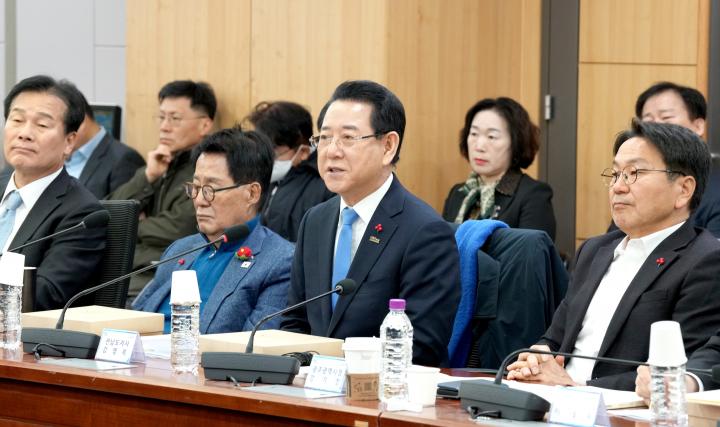 광주전남 행정통합 특별법 검토 제2차 조찬 간담회 / 사진제공=전라남도 |
[Jeonnam = Honam News] aihnnews@kakao.com
Editorial
Will We Revive the Regions, or Put the Nation’s Future to the Test?
The Special Act for the Establishment of the Jeonnam–Gwangju Special City is not merely a bill for administrative integration.
It is, in essence, a national response to a fundamental question: how does the Republic of Korea perceive its regions?
The integration model proposed by Jeonnam Province and Gwangju Metropolitan City does not define the region as a recipient of support, but rather as a space where the nation’s future is tested first.
Until now, local administration has relied heavily on central government subsidies and regulatory relief.
When population declined, budgets were increased.
When industries weakened, short-term projects were attached.
Yet the outcome is unmistakable.
Capital-area concentration has not slowed, and the self-reliance of the regions has grown even weaker.
Without changing this structure, regional extinction cannot be prevented.
This is precisely why the Jeonnam–Gwangju Special City Act deserves close attention.
The Act integrates administration, welfare, energy, and industry into a single framework and presents a new direction as a “Basic Society Pilot Region.”
The introduction of AI-based administration—automating simple and repetitive tasks and providing uninterrupted public services 24 hours a day—is not merely about administrative efficiency.
It represents an attempt to redefine the very concept of public service.
The same applies to income policy.
Rural basic income and pensions for retired elderly farmers are not simple welfare measures.
They formally recognize that years spent in agriculture, fisheries, and rural communities constitute a contribution that has sustained society.
Such policies are inconceivable without a fundamental shift in perspective—viewing regions not as objects of support, but as creators of value.
The “Sea Pension,” which distributes offshore wind power revenues directly to residents, makes this intention even clearer.
For decades, energy-producing regions have borne environmental burdens while profits flowed elsewhere.
Jeonnam–Gwangju Special City has declared its intent to correct this long-standing imbalance.
A structure that returns the added value generated by regional resources to local residents marks the starting point for regions to build sustainable fiscal independence.
The foundation enabling all these experiments lies in unprecedented fiscal and autonomy-related special provisions.
The Act provides for an additional 12 percent of the total local shared tax to be allocated annually for 20 years, institutionally guarantees fiscal equity among districts and counties, and grants autonomy over public official staffing levels.
This represents a departure from centralized administration and an expression of trust premised on responsible self-governance.
Nor should the symbolic provisions be underestimated.
By explicitly stating the Gwangju Spirit and the spirit of “Daedong” in the purpose clause, and by linking the Yeosu–Suncheon Uprising with the May 18 Democratization Movement for historical succession, the Act declares that Jeonnam–Gwangju Special City is more than an administrative experiment—it is a city that inherits the democratic and communal values of the Republic of Korea.
Of course, concerns remain.
Experiments can fail.
Without meticulous design and oversight, the stability of AI administration, the sustainability of basic income, and the fairness of energy revenue distribution could instead generate conflict.
Yet without experimentation, there can be no answers.
Existing regional policies have already reached their limits.
The question is now clear.
Is Jeonnam–Gwangju Special City an excessive privilege, or a necessary national experiment?
At a time when regional extinction has become a national crisis, this Special Act is not a matter of choice—it is an attempt.
If successful, Jeonnam and Gwangju will set a new standard for local governance in Korea.
Even if it fails, the lessons learned may become a blueprint for reviving other regions.
Will we revive the regions, or continue to postpone the future?
The Jeonnam–Gwangju Special City Act confronts this question head-on.
 ai호남뉴스 박충배 편집/칼럼/논설 aihnnewsr@kakao.com