2026.03.27 (금) 13:09




 닫기
닫기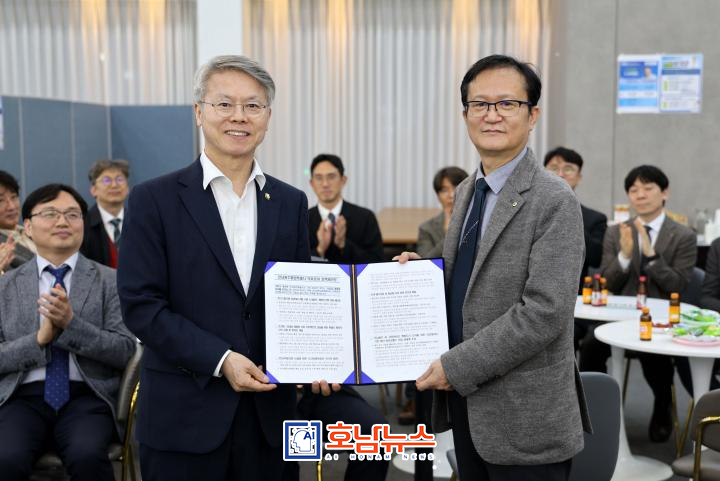 ‘지역의료 국가책임 시대’ 선언 / 사진제공=민형배선대위 |
전남·광주 통합특별시를 둘러싼 정책 경쟁이 ‘생명과 건강’이라는 본질적 의제로 급속히 이동하고 있다. 단순한 복지 정책을 넘어, 지역의 존립과 직결된 ‘의료 주권’ 확보가 핵심 아젠다로 부상하는 흐름이다.
더불어민주당 전남광주통합특별시장 경선 후보인 민형배 국회의원(광주 광산구을)의 민심캠프는 27일 “조선대병원 지역의료 발전 추진단이 지난 24일 경선 사무소를 방문해 정책 제안 및 전달식을 개최하고 협력 의지를 공식화했다”고 밝혔다.
이번 전달식은 지역 핵심 의료기관이 직접 정치권과 정책 연대를 선언했다는 점에서 단순한 건의 수준을 넘어, ‘지역의료 체계 재설계’의 신호탄으로 해석된다.
이날 행사에는 최남규 조선대병원장(외과)을 비롯해 김동휘 부원장(정형외과), 고재웅 의생명원장(안과), 조승환 대외협력처장(정형외과) 등 주요 보직자와 함께 내과·외과·마취통증의학과·성형외과 등 각 분야 전문의들이 대거 참석해 정책의 무게감을 더했다.
■ “공공의료는 선택 아닌 의무”… 5대 핵심 정책 제안
추진단은 “새롭게 출범할 통합특별시의 가장 중요한 책무는 시민의 생명과 건강을 지키는 일”이라고 강조하며, 다음과 같은 5대 핵심 정책을 제시했다.
첫째, 민간 의료기관의 공공의료 역할 수행에 대한 재정적·행정적 지원을 제도화해 ‘공공의료 확장형 모델’을 구축해야 한다는 제안이다.
둘째, 조선대학교병원과 전남대학교병원의 새병원 신축을 위한 특별시 차원의 행정 지원과 인허가 패스트트랙 도입으로 의료 인프라 확충을 가속화해야 한다고 밝혔다.
셋째, 전남 국립의과대학 신설과 연계해 조선대병원을 핵심 임상교육·수련 협력병원으로 지정하고, 지역 기반 의료 인재 양성 체계를 구축해야 한다는 전략이다.
넷째, 응급·소아·산부인과 등 필수의료 분야에 대한 집중 지원과 함께 한국형 질병통제예방센터 도입, 공공백신 R&D센터 구축 등 감염병 대응 및 공공보건 역량 강화를 제시했다.
다섯째, 의료데이터 기반 바이오헬스 산업 생태계를 조성하고 산·학·연·병 협력을 통해 AI·의료바이오 특화도시를 구축해야 한다는 미래 전략이 포함됐다.
■ “의료가 도시 경쟁력”… 지역의료 → 산업으로 확장
추진단은 특히 의료를 단순한 복지 영역이 아닌 ‘산업과 미래 성장동력’으로 확장해야 한다는 점을 강조했다.
추진단 관계자는 “조선대병원의 임상 역량과 교육 시스템을 기반으로 의료 인재 양성 생태계를 구축하고, 특별시 차원의 신속한 제도 지원을 통해 지역민 건강권을 실질적으로 지켜내겠다”며 “민형배 후보와의 정책 협력을 통해 실행력을 확보하겠다.”고 밝혔다.
■ 민형배 “의료격차 해소, 생존의 문제”… 전면 수용 의지
민형배 후보는 “지역 간 의료 격차는 단순한 서비스 문제가 아니라 시민의 생명과 직결된 구조적 불평등”이라며 “오늘 제안된 정책들은 통합특별시의 핵심 설계도가 될 수 있다”고 평가했다.
이어 “공공의료 확충과 의료바이오 산업 육성을 동시에 추진해 전남광주통합특별시를 대한민국 대표 AI·의료바이오 도시로 도약시키겠다”며 강한 추진 의지를 밝혔다.
■ ‘건강권’이 판을 바꾼다… 통합특별시 정책 경쟁 격화
이번 정책 제안은 전남·광주 통합 논의가 행정 통합을 넘어 ‘삶의 질 경쟁’으로 전환되고 있음을 보여주는 상징적 사건으로 평가된다.
특히 의료 인프라, 인재 양성, 바이오 산업까지 연결된 ‘복합 정책 패키지’가 등장하면서, 향후 경선 구도 역시 단순 정치 구호가 아닌 ‘실행 가능한 정책 경쟁’ 중심으로 재편될 가능성이 커지고 있다.
전문가들은 “통합특별시의 성공 여부는 결국 시민의 생명과 직결된 의료 시스템에서 판가름 날 것”이라며 “이번 제안은 그 방향을 명확히 제시했다는 점에서 의미가 크다.”고 분석했다.
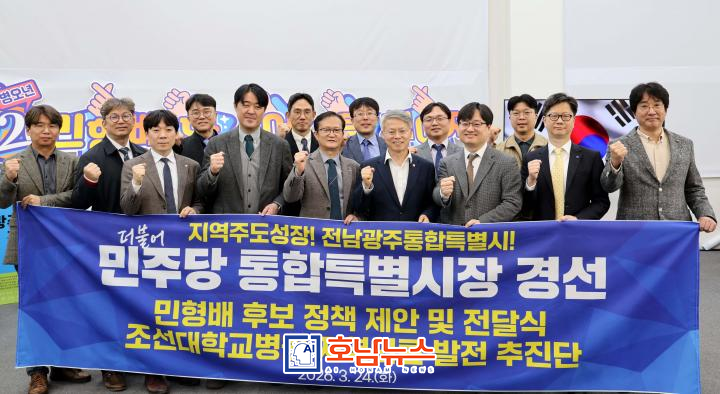 ‘지역의료 국가책임 시대’ 선언 / 사진제공=민형배선대위 |
“Life Is Non-Negotiable”… Min Hyung-bae Declares an Era of State Responsibility for Regional Healthcare
Chosun University Hospital Task Force Assembles… Proposes ‘Five Major Transformations’ in Public Healthcare and AI-Bio
“End Medical Inequality”… Health Rights Emerge as Core Agenda of the Integrated Special City
【Jeonnam·Gwangju = AI Honam News】 aihnnews@kakao.com
Policy competition surrounding the proposed integrated special city of Jeonnam and Gwangju is rapidly shifting toward the fundamental agenda of “life and health.” Beyond conventional welfare policy, securing “medical sovereignty” — directly tied to the survival of the region — is emerging as a central issue.
The Minshim Camp of Min Hyung-bae, a preliminary candidate of the Democratic Party for mayor of the Jeonnam–Gwangju Integrated Special City (Gwangsan-eul, Gwangju), announced on the 27th that “the Regional Healthcare Development Task Force of Chosun University Hospital visited the campaign office on the 24th to deliver policy proposals and formally pledge cooperation.”
This event is interpreted as more than a simple policy suggestion—it signals the beginning of a comprehensive redesign of the regional healthcare system, as a key medical institution directly declared policy alignment with the political sphere.
Attendees included Chosun University Hospital Director Choi Nam-gyu (General Surgery), Vice Director Kim Dong-hwi (Orthopedics), Biomedical Institute Director Ko Jae-woong (Ophthalmology), and External Cooperation Director Cho Seung-hwan (Orthopedics), along with specialists from internal medicine, surgery, anesthesiology and pain medicine, and plastic surgery—underscoring the weight of the policy initiative.
■ “Public Healthcare Is Not Optional”… Five Key Policy Proposals
The task force emphasized that “the foremost responsibility of the newly established integrated special city is to protect the lives and health of its citizens,” and presented five core policy directions:
Institutionalizing financial and administrative support for private medical institutions to fulfill public healthcare roles, thereby establishing an “expanded public healthcare model.”
Accelerating healthcare infrastructure expansion through administrative support and fast-track approval systems for the construction of new hospitals at Chosun University and Chonnam National University.
Establishing a regional medical workforce training system by designating Chosun University Hospital as a core clinical training partner linked to the planned National Medical School in Jeonnam.
Strengthening essential medical services—including emergency care, pediatrics, and obstetrics—while introducing a Korean-style Centers for Disease Control and Prevention and establishing a public vaccine R&D center.
Building a bio-health industry ecosystem based on medical data, and fostering an AI-driven medical bio hub through industry-academia-research-hospital collaboration.
■ “Healthcare Is Urban Competitiveness”… Expanding from Welfare to Industry
The task force stressed that healthcare must evolve beyond a welfare domain into a key driver of industrial growth and future competitiveness.
A task force representative stated, “Based on Chosun University Hospital’s clinical expertise and education system, we will build a sustainable ecosystem for training medical professionals and ensure practical protection of citizens’ health rights through swift institutional support at the special city level,” adding that “we will secure execution power through close cooperation with candidate Min Hyung-bae.”
■ Min Hyung-bae: “Medical Inequality Is a Matter of Survival”… Signals Full Acceptance
Min Hyung-bae stated, “Regional disparities in healthcare are not merely service gaps but structural inequalities directly tied to people’s lives,” adding that “the policies proposed today could serve as a blueprint for the integrated special city.”
He further emphasized, “By simultaneously expanding public healthcare and fostering the medical bio industry, we will elevate the Jeonnam–Gwangju Integrated Special City into Korea’s leading AI-driven medical bio hub.”
■ ‘Health Rights’ Reshape the Political Landscape… Intensifying Policy Competition
This policy proposal is seen as a symbolic turning point, indicating that discussions on regional integration are evolving beyond administrative restructuring into a competition over quality of life.
With the emergence of a comprehensive policy package linking healthcare infrastructure, talent development, and the bio industry, the electoral landscape is expected to shift toward practical and executable policy competition rather than political rhetoric.
Experts noted, “The success of the integrated special city will ultimately be determined by its healthcare system, which is directly tied to citizens’ lives,” adding that “this proposal clearly defines that direction.”
 ai호남뉴스 박충배 편집/칼럼/논설 aihnnewsr@kakao.com