2026.03.27 (금) 16:43




 닫기
닫기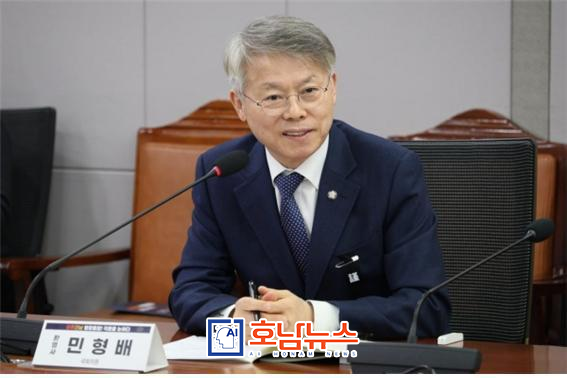 민형배의원 / 사진제공=민형배의원실 |
중단 위기에 놓였던 국가 핵심 문화 프로젝트가 다시 움직이기 시작했다.
더불어민주당 민형배 국회의원(광주 광산구을)이 대표 발의한 「아시아문화중심도시 조성에 관한 특별법 일부개정법률안」(이하 아특법 개정안)이 27일 국회 상임위원회를 통과하며, 사업 정상화의 결정적 전환점을 맞았다.
이번 개정안은 조성사업 유효기간을 기존 2031년 12월 31일에서 2036년 12월 31일까지 5년 연장할 수 있도록 하는 내용을 담고 있다. 단순한 기한 연장이 아니라, 국가가 책임져야 할 장기 프로젝트를 다시 제도권 안으로 복원하는 조치라는 점에서 의미가 크다.
■ “국가가 시작한 사업, 국가가 끝내야 한다”… 붕괴 위기에서 ‘재가동’
아시아문화중심도시 조성사업은 참여정부 시절 국가균형발전 전략의 핵심 축으로 출발했다.
그러나 이후 정권 교체를 거치며 예산 축소와 추진력 약화가 반복되며 사실상 ‘방치된 국가사업’이라는 비판을 받아왔다.
실제 국비 지원은 급격히 줄어들었다.
2023년 513억 원에서 2024년 220억 원, 2025년 172억 원까지 감소하며 사업 동력은 급격히 약화됐다.
국비 투입 비율 역시 30% 수준에 머물며, 지방비 의존 구조가 심화된 상태다.
향후 3년간 약 1조 원 규모의 추가 재원이 필요한 상황에서, 법적 기한 연장 없이는 사업 자체가 중단될 가능성도 제기돼 왔다.
■ “구조적 문제 정면 돌파”… 민형배, 국회에서 전면 압박
민형배 의원은 22대 국회 문화체육관광위원회 활동을 통해 해당 사업의 구조적 문제를 집중적으로 제기해왔다.
핵심 쟁점은 명확했다.
▲낮은 국비 투입률
▲지방비 50% 매칭 구조의 한계
▲조성위원회 지위 격하 및 장기간 미구성
▲일몰기한 임박에 따른 사업 붕괴 위험
민 의원은 국정감사와 예산 심사 과정에서 “국가사업을 지방에 떠넘기는 구조는 지속 불가능하다”며 정부 책임 강화를 지속적으로 요구해왔다.
■ “정책 공백 끝났다”… 예산 증가·위원회 재가동
정책 환경도 변화하고 있다.
이재명 정부 출범 이후 2026년 국비는 222억 원으로 전년 대비 약 30% 증가하며 반등 조짐을 보이고 있다.
특히 3년 8개월간 공백 상태였던 조성위원회가 재구성되면서, 사실상 멈춰 있던 정책 추진 체계도 정상 궤도에 복귀했다.
이번 상임위 통과는 이러한 변화 흐름에 법적 기반을 부여한 조치로 평가된다.
■ “이제 시작이다”… 본회의 통과·추경 확보가 관건
민형배 의원은 “사업 종료가 임박한 상황에서 안정적 추진을 위한 법적 기반 마련은 필수였다”며, “아시아문화중심도시 조성사업을 반드시 완수하기 위해 추경 예산 확보는 물론, 개정안의 본회의 통과까지 끝까지 책임지겠다.”고 밝혔다.
“A Stalled National Cultural Strategy Restarts”… Rep. Min Hyung-bae’s ACC Special Act Amendment Clears Committee
Subheadline: Five-year extension to 2036… A signal to restore state responsibility for the Asia Culture Hub project
【Jeonnam·Gwangju = AI Honam News】 aihnnews@kakao.com
A core national cultural project that had been on the brink of suspension is beginning to move again.
The amendment to the Special Act on the Creation of an Asian Culture Hub City (hereinafter “ACC Special Act Amendment”), proposed by Democratic Party lawmaker Min Hyung-bae (Gwangju Gwangsan-eul), passed the National Assembly standing committee on the 27th, marking a decisive turning point toward normalizing the project.
The amendment allows the project’s effective period to be extended by five years—from December 31, 2031, to December 31, 2036. More than a simple extension, it is seen as a move to restore a long-term national project back into a stable institutional framework under state responsibility.
■ “What the state began, the state must complete”… Restart from the brink
The Asian Culture Hub City project was launched during the Roh Moo-hyun administration as a key pillar of balanced national development.
However, through subsequent administrations, repeated budget cuts and weakening momentum led to criticism that it had become a “neglected national project.”
Government funding declined sharply:
from KRW 51.3 billion in 2023 to KRW 22.0 billion in 2024, and further to KRW 17.2 billion in 2025.
The national funding ratio also remained at around 30%, deepening reliance on local government budgets.
With approximately KRW 1 trillion needed over the next three years, concerns had grown that without a legal extension, the project itself could face termination.
■ “Confronting structural flaws head-on”… Legislative pressure intensifies
Rep. Min has persistently raised structural issues surrounding the project through his role on the National Assembly’s Culture, Sports and Tourism Committee.
Key concerns include:
▲ Low national funding ratio
▲ Limitations of the 50% local matching system
▲ Downgraded status and prolonged vacancy of the project committee
▲ Imminent sunset clause threatening project collapse
During audits and budget reviews, he emphasized that “a structure that shifts national responsibility onto local governments is unsustainable,” calling for stronger central government accountability.
■ “Policy vacuum ends”… Budget rebound and committee revival
The policy environment is now shifting.
Following the launch of the Lee Jae-myung administration, the 2026 national budget increased to KRW 22.2 billion—up about 30% year-on-year—showing signs of recovery.
In addition, the project committee, which had been inactive for three years and eight months, has been reconstituted, effectively bringing the stalled policy system back onto track.
The passage of the amendment at the committee level is seen as providing a legal foundation for this renewed momentum.
■ “This is only the beginning”… Final approval and funding remain key
Rep. Min stated,
“Securing a legal foundation for stable implementation was essential as the project’s deadline approached,” adding,
“We will ensure not only supplementary budget allocation but also the final passage of the amendment in the plenary session to successfully complete the project.”
■ AI Honam News Analysis
The committee passage of the ACC Special Act Amendment carries significance beyond a routine legislative step.
It represents a political and policy declaration to reposition the Asian Culture Hub City initiative as a national strategic project rather than a regional cultural program.
Two critical challenges remain:
final approval in the plenary session,
and substantial fiscal commitment.
The law has opened the path—
but without budgetary backing, the project risks stalling once again.
What is needed now is not rhetoric,
but execution backed by full national responsibility.
 ai호남뉴스 박충배 편집/칼럼/논설 aihnnewsr@kakao.com